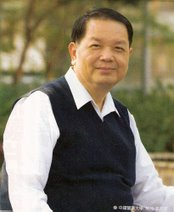
THE TAIWAN REPORT Part 1 Philip A.M. Rogers MRCVS e-mail :
progers@grange.teagasc.ie (1982)Postgraduate Course in Veterinary AP, Sydney, 1991
SUMMARY
Section 1 summarises the trip schedule between November 13-28th, 1982.
Section 2 summarises the present status of Chinese medicine in Taiwan. Acupuncture (AP) is only one part of Chinese medicine, which also includes "Western" medicine, moxibustion and herbal medicine.
AP and allied techniques, as seen there, are discussed under various headings: simple needling versus electro-AP, the use of AhShi ("Ah Yes!", sensitive) points, myofascial syndromes and AhShi points, Earpoints, Local points, Distant points, methods of needling, quick needling of AhShi points, the DeQi (Teh Ch'i) phenomenon, personal experience of "needle sensations", moxibustion, cupping, AP in paralysis/paraplegia. Scar therapy was not seen during this trip. It is discussed in the hope that it may stimulate interest in this valuable therapy.
Section 3 discusses 49 of the clinical cases observed at the Veterans' General Hospital, Taipei (VGH) and China Medical College, Taichung (CMC). Many other cases were observed, but details were not noted. Most of the cases presented for treatment involved pain syndromes but I was assured that many syndromes other than pain are also treated successfully. The great majority (69%) were helped markedly or moderately by AP in 1-20 minutes.
Cases are discussed under: multiple aches and pains, tension, insomnia, neurasthenia, pain following traumatic injury, head and neck stiffness/ pain, shoulder pain/stiffness, upper limb pain, respiratory difficulty, lowback pain/stiffness + sciatica, lower limb problems, post-CVA cases.
Section 4 discusses AP research in Taiwan under the main centres and topics for research listed in the literature and Symposium abstracts, which were made available to me.
Section 5 discusses AP training in Taiwan. Courses in English are available for foreign professionals. Emphasis ranges from classical (traditional) concepts to modern concepts of neurophysiology and trigger point therapy, depending on the teaching body and the type of course chosen.
What one sees and hears during a 2-week trip is automatically biased by the observer and by the people and places visited. It may not represent the real day-to-day situation of the whole country. Nevertheless, my report may interest open-minded Westerners to go and see for themselves.
1. SCHEDULE
Nov 13th: Aircraft Dublin-London-Dubai-Hong Kong.
Nov 14th: Landing in Hong Kong Airport was exciting ! Had I not known that this is one of the world's most tricky landing places, I might have thought we were crash-landing in the centre of the city! Coming in, after dark, the aerial view of the city, with its millions of street lights and multi-coloured advertisements, was astonishing. After a 2-hour stop, I got the China Airlines flight to Taipei.
On arrival at Taipei, I heard my name called. What had I done ? No! It was to report to the Airport Authority for VIP treatment! I was whisked through Customs and Immigration before I could say "Jack Robinson".
Dr. Jen-Hsou Lin met me at the Arrivals Hall and he had arranged transport to the city. My first impression of the city was the chaotic traffic. Thousands of motor bikes, cars, trucks, bicycles and pedestrians seemed to converge on intersections. Drivers who stay accident-free in Taipei must be among the best in the world.
Then Dr. Lin pointed to the Grand Hotel. It is a wonderful sight, a huge hotel in magnificent Chinese style, perched on top of a hill and fronted by a beautiful Chinese gate. So this was Taipei! The car swept up to the main door. We entered the lobby. What a sight! It must have been 50 m x 50 m - the most impressive hotel lobby I have seen. The architecture, sculpture and decoration was quite unlike anything in my previous experience.
Nov 15th: A lazy day, spent relaxing with Dr. Lin, his wife and children. We visited Yang Ming Mountain, in beautiful sunshine. The weather was like high summer in Ireland. (I had left Dublin in wet cold November weather).
Nov 16th: Down to business. Discussions with Dr. Lin about his work in the Department of Animal Husbandry, National Taiwan University. Introductions to his colleagues and some of his students. Afternoon with Dr. Chien Chung in the AP Department, Veterans' General Hospital, Taipei (VGH).
Nov 17th: Attended lectures by Chung at the Chinese AP Research Foundation (CARF) Headquarters, Taipei. The lectures were on his research and clinical effects of needling AhShi points, and on his use of YangLingQuan (GB34) in pain control in acute traumatic injury. These were excellent lectures and were listened to attentively by a group of visiting M.D.'s on a CARF training course. Lunch with Chung. Afternoon in the AP Department, VGH.
Nov 18th: Discussions with Dr. Lin at his laboratory. We attempted our first AP analgesia test in the cow. It was 90% successful (see later). Afternoon in the VGH. Lectures to Dr. Lin's students.
Nov 19th: Opening of the Taipei AP Symposium. Evening Banquet and Kampe!
Nov 20th: Symposium. Banquet and more Kampe!
Nov 21st: Symposium closed at 1700h. Banquet and still more Kampe
Nov 22nd: Trip to China Medical College, Taichung (CMC). Stayed at Lucky Hotel. Banquet and Kampe, Kampe!
Nov 23rd: Veterinary AP Seminar, Taichung Vet School. Another banquet. Kampe, Kampe, Kampe! I'll never survive this!
Nov 24th: Visit AP Department, CMC. Return to Taipei. Farewell to Drs. Ha, Hand, Pomeranz. Stay at YWCA! Dinner at the home of Dr. Lin and his family.
Nov 25th: Pig Research Institute, Chunan. Lecture to Institute staff and local vets. Evening meal with Dr. Lin's co-workers (Chang Chia, Shieh Meei Hwa, Tsou Li Mei, Ms. Wang and Chin Sun).
Nov 26th: Visit Dr. Sun at the Yang Ming Medi
cal School. See Dr. Ha's research facilities there. Afternoon in Chung's Department, VGH.
Nov 27th: Very relaxing day, driving around the Northern coast of Taiwan. Fishing and seafood. Our host was Eddie Tsang. Sulphur baths at Yang Ming Mountain. Final banquet (Mr. Tsang).
Nov 28th: Sad farewell to Jen-Hsou and Li-Fei Lin. Flew Taipei-Singapore-London-Dublin. Composed my poem "Taiwan" on the back of the Qantas menu card, leaving Singapore. This poem is dedicated to Jen-Hsou and Li-Fei Lin as a gesture of thanks for their friendship and hospitality and as a memory of a beautiful land and its people.
2. CHINESE MEDICINE IN TAIWAN
Four afternoons were spent at the AP Department, VGH, one morning session at CARF, two sessions at the AP Department of CMC and one morning at the Yang Ming Medical School, Taipei. The case load for AP in VGH and CMC clinics was said to be 100-150 patients/day.
The following section is based on personal observations in the clinics and on discussions with Drs. Chien C. Chung, Han Ping Lee, Ming T. Lin and Wei Tse Hsiung (VGH), and Drs. Hong Chien Ha, Chung-Gwo Chang and R.T. Chiang (CMC) and Dr. Albert Sun, Yang Ming Medical School, Taipei.
1. Chinese medicine, as practised in Taiwan, combines the best of "Western" and "Traditional Chinese" medicine. Some doctors are trained in "Western" medicine, some in "Chinese" medicine and some in both systems.
2. Traditional Chinese medicine (TCM) involves study of AP, moxibustion and HERBAL MEDICINE. The latter is most important. Although medical theory (Yin-Yang, Five Phases, Perverse Causes of Disease, Disease Syndromes and Diagnostics) is the same for all branches of TCM, some herbalists do not know AP and some acupuncturists do not know herbal medicine.
The Chinese herbal pharmacopoeia is very extensive. Some of the plants are cultivated locally and processed in special pharmacies, such as in the CMC. Some of the herbal medicines are imported in crude or processed forms. I did not witness the use or efficacy of these medicines, but I was told by many doctors that they are very powerful and (when used by experts) are extremely valuable in conditions as diverse as CVA, hypertension, neurasthenia and many other internal diseases. Western doctors (and vets!) have much to learn about these medicines.
3. AP and allied techniques in clinical practice: Considerable variation exists in the choice of points for therapy and in the methods of manipulating the needles. In general, I saw very little use of electro-AP (although the stimulators were freely available in every clinic visited). There was general agreement that manual needling alone was as good as, or better, than electro-needling for most conditions requiring AP. Exceptions are (a) in AP analgesia before surgery (not witnessed) and (b) in certain chronic conditions, especially paralysis/paresis after CVA or nerve injury.
3.1. AhShi points: AhShi means " Ah Yes, or Ouch!", the exclamation from the subject when a painful point is pressed. The best AhShi point for therapy is the Trigger Point (TP), i.e. palpation pressure on the point causes a pain sensation to radiate to the problem area, muscle, or organ. It is seldom located in the area of pain. Patients usually are unaware of its presence until it is palpated. Other pain-sensitive areas (motor points, "fibrositic nodules", local pain-points etc) may be useful in therapy but they are not as powerful as the TPs (the "real AhShi" points).
Great emphasis is placed on a careful search for AhShi points. These are usually present in pain conditions, such as headache (esp. neck and shoulder muscles), joint pain (shoulder, elbow, lowback syndrome, hip, knee) and myofascial syndromes. They may also arise in some cases of internal disease (lung, heart, liver, gall bladder, g/i/t, g/u tract). In internal disease the Shu points (organ reflex points on the BL Channel (paravertebral)) are carefully palpated, as are the Mu points (Alarm points on the abdominal/thoracic area). All pressure-sensitive areas are AhShi points but AhShi points are not always Trigger Points (TPs)!
AhShi points may be located near to or far away from the problem area. AhShi/TP points can recruit new triggers elsewhere, usually in the muscles. Painful areas in scarred tissue may also act as powerful TPs and these areas must be treated to obtain optimum results. Little emphasis was placed on this fact (see section 9 below).
AhShi therapy is the best introduction to the value of needle therapy. Unfortunately, AhShi points are not present in every case, and Western doctors who know only the AhShi method are unable to help by needle techniques in such cases. AhShi points disappear when the condition resolves and the disappearance of AhShi points during a course of therapy indicates a good prognosis.
Chung did extensive clinical research with AhShi points and published the English version of his book (C. Chung (1983) "AH SHIH Point: The pressure pain point in AP: Illustrated guide to clinical AP", Chen Kwan Book Co., Taipei). This book alone would enable Western MD's (and vets) who know little or nothing about AP to begin AhShi therapy immediately and to get very good clinical results from it. (Although AhShi therapy sometimes gives better results than traditional AP, it was agreed that even better results can be got if a proper study of the AP system is made).
3.1.1. Myofascial syndrome and AhShi points: Chung defines the syndrome as one involving muscle pain/stiffness, especially around joints. The joints often are stiff, but show no inflammatory or X-ray lesions. There often is a history of intermittent recurrence. AhShi (TP) points often are present, but the patient is unaware of them until they are pressed. The diet usually is satisfactory and the neural causes of the pain are obscure.
The AhShi points usually show decreased electrical resistance and decreased local skin temperature. Local vasomotor abnormalities and dermatographic changes occur in the AhShi area.
Histology of the AhShi area shows local cell infiltration and non-specific inflammatory changes. There is sometimes a fibrous infiltration of the AhShi area (ropy muscle sign). Pressure on the AhShi often refers pain to the "problem area". Needling the AhShi often causes the "Jump Sign"; local muscle contractions cause the needle to jump.
Chung emphasises that some acupuncturists needle the problem (local) area i.e. the area of referred pain. This is inferior AP (although it can help). Much better results can be obtained by a careful search for the TP (AhShi point). In myofascial syndromes, AhShi therapy can give dramatic (and often immediate) relief of pain. AhShi therapy in these cases can give better results than traditional AP using local and distant points.
AhShi points may arise anywhere in the muscles, but they are often near the problem area. The most important muscles to search for upper body problems are: the neck muscles, infraspinatus and GB21 area. For lower body problems search the gluteus, vastus medialis, soleus, gastrocnemius. In upper limb pain (shoulder, elbow, arm, etc) the AhShi is often in the infraspinatus of the affected limb. In shoulder pain, the AhShi may be in the GB21 area, or scalenus muscle. In bilateral anterolateral shoulder pain, the AhShi is often in the sternalis muscle. In such cases, one needle in the sternal AhShi can give immediate pain relief. In abdominal and intercostal pain, check the back and sides for AhShi. In heel pain, the AhShi is often in the soleus area, left or right of BL57. In plantar pain, the AhShi is often in the gastrocnemius. In middle finger pain, search muscles near TH08. In lowback/leg pain, search the gluteus muscle.
About 33% of all cases of aching pain are myofascial in origin and respond fast and reliably to AhShi therapy. Expect excellent results in 38% and good results in 60% of cases (98% total cases). Disappearance of the AhShi is an excellent prognostic sign.
Chung's AhShi findings agree well with Western experiences of TP therapy, as described by Ronald Melzack (Canada), Pekka Pontinen (Finland) and Alex Macdonald (UK).
Miscellaneous (Chung):
Renal colic pain/spasm: GB34, LV03, SP04,06
Gastric colic/pain/spasm: ST36, CV12
Biliary colic/pain/spasm: GB34
3.2 Earpoints
I did not observe a single case of ear-AP. However, I was told by some local doctors that earpoints are sometimes used alone or in combination with body points, with good success (see Symposium report also).
3.3 Body points
a. The most commonly used points seen in use were the Channel points, especially LU07, LI04,10,11,15, ST25,36,37,38, SP04,06,09, HT07, SI03,06,09,11,19, BL10,11,23,40,57,60,62, KI03, PC06, TH05,14,15, GB20,21,30,31,34,39, LV03, CV04,12. (GV points were seldom seen used. GV15 (YaMen), needled 2" deep in one patient, appeared to cause a very severe left-sided headache, needle shock and some loss of power in the legs. The patient, an elderly lady, was being treated for facial paralysis and slurred speech following a minor CVA. She was most unhappy when questioned by me about one hour after treatment. (See CVA, later).
b. Extra-Channel Points (points not on the main Channels): These points often were used for their local or distant effects. The most commonly observed were Hand Points "Loin & Leg" between the proximal heads of metacarpals 2-3 and 4-5 respectively. These Hand Points gave immediate relief in some cases of lumbago and lowback/leg pain. Hand Point "Neck" (between the knuckles of fingers 2-3 with fist tightly closed, needled 1" deep towards the wrist. This point gave immediate relief of neck pain/restricted movement in one patient. Other Extra-Channel points used were: LanWei (Appendix point) in abdominal pain/constipation, XiYan (Knee Eyes) in knee pain, YinTang (between eyebrows) and TaiYang (temporal fossa) in headache, sinusitis.
c. Distant points: Distant points are often used in VGH (and to a lesser extent in CMC). The clinical response to needling distant points (when no local points are used) can be dramatic and cannot always be explained by short reflexes. It is known that a stimulus via one spinal nerve may activate reflex responses in areas innervated by up to 6 segments above or below the input nerve. Examples are the use of the points "Loin and Leg" or "Lumbar Area" (on the dorsum of hand) or SI06 to treat lowback/leg problems; ST38, GB39 or GB34 to treat shoulder or neck problems; LU07 in headaches. The use of TH03, SI03, Hand point "Neck" is not so inexplicable in neck/shoulder problems because the innervation is related to these areas.
In myofascial and some arthrotic syndromes, Chung prefers to use Distant rather than Local points. If patient is not helped within 20 minutes, the needles may be left in situ for up to 40 minutes and other points (AhShi, local points) may be tried also.
4. Needle Manipulation
All operators were very careful to cleanse the skin (alcohol swab), use sterile needles (disposable in VGH) and to touch only the handle (not the body) when inserting the needle.
Styles of inserting the needle varied between operators. In general, staff at VGH inserted the needle while twirling vigorously clockwise and anticlockwise until the skin was penetrated, and then the needle was advanced with less twirling. "Sparrow pecking" (up and down movement) was fast and strong, often combined with some twirling.
Vigorous needle twirling and pecking was continued for 5-30 seconds until definite "DeQi" was reported by the patient and the visible signs were observed by the operator.
In contrast, Dr. R.T. Chiang (CMC) inserted the needle through the skin with one, deft half-twirl and push. He then advanced the needle with minimal, if any, twirling to its correct depth. His sparrow-pecking and subsequent twirling was slower and more deliberate than in VGH. He also scratched the handle vigorously and "went around the clock" (moved needle handle like the hands of a clock through 360 degrees) once or twice, to get DeQi. He told me that the classic (traditional) methods of needle manipulation ("tonification" and "sedation" manipulation) are very important in difficult cases. (Staff at VGH do not appear to put importance on the classical needle manipulations used to tonify or sedate Qi).
In both hospitals, needles usually were left in position for 15-30 minutes (estimated average 20 minutes). In VGH, some twirling and pecking was repeated just before needle removal. This was mainly to ensure that the needle was not "caught" in the tissues and to avoid rough removal of a "caught" needle. In contrast, at CMC, a quick check that the needle was "free" was followed by gentle removal of the needle.
At VGH, a cotton-bud was used to apply pressure at the point for a few seconds after removal, to prevent local pinpoint bleeding.
4.1. Needling AhShi/TP points: This was one exception to the 20-minute needling time. Chung twirled the needle and pecked very strongly for 15-60 seconds. The patient often had very strong reaction to this (grunts, slight groans, facial grimaces etc). In many cases, the needle was removed within the 15-60 seconds. To my amazement (and that of other observers) the pain or stiffness which the patient had reported before needling seemed to have disappeared (as judged by the consternation or smile on the patient's face and/or visible and marked improvement in neck/shoulder/lumbar/knee movement)!!
The immediate responses seen after AhShi needling in some patients at VGH were hard to believe but I witnessed them many times (see case notes later). This is certainly similar to the Huneke "Sekunden phanomen" (instantaneous phenomenon) and is a typical reaction to TP therapy (Melzack, Pontinen, Macdonald, Lewit ). See Section 9. I was told that similar responses are not uncommon at CMC but I did not witness any there, probably, because the total number of cases I observed there were much less than in the VGH, due to shortage of time to stay at CMC.
5. DeQi
All experts agreed that it is essential to get DeQi if the best results are to be obtained in needle therapy. In Chinese medical experience, DeQi is known to have subjective (patient), subjective (operator) and objective characteristics.
5.1. Patient's sensations: The patient reports strong sensations running, proximally, or distally from the needle. Sometimes the sensation is said to travel proximally and distally. The sensations are described as: "sore", "heavy", "tingling," "electric shock-like", "running", "aching" (but not painful). The observable reactions of the patient at this time included grunts, groans, flinching of the limb or part being needled, explosive intake or expulsion of breath, facial grimaces and occasionally (in strong reactors) sudden jerks involving all or part of the body, and occasional expletives.
During the Symposium, I was needled at left LI10 by a Master. This man claimed that with really expert needle use, the PCS sensation should be felt not only along the needled Channel (LI Channel goes from index finger to nose) but also into its following Channel (ST follows LI, goes from eye to second toe via nipple and anterolateral knee). I felt the classic DeQi sensations and reacted as a typical strong reactor, as described above and in 5.3 below. However, the sensation travelled a maximum of 6" upwards, whereas it travelled distally to the dorsum of the hand and was most marked in the 6" below the point. After 3-4 minutes, the palm of my left hand became very cold and sweaty. My right palm was (normally) warm and was sweating less than the left. I had no queasiness, nausea or other signs of needle shock. The dull ache (6" above, to 6" below LI10) persisted about 2 hours afterwards. The point was slightly sensitive to local pressure for 2 days afterwards. I have needled many AP points on my body, obtained DeQi most times but without such a strong PCS reaction.
5.2 Operator's sensations: The operator usually has the sensation that the needle is being gripped by the tissue, i.e. especially on withdrawal of the needle, (when a definite "nipple" seems to form at the skin surface) or on twirling of the needle (when the needle seems to "lock" at the end of each twirl).
5.3 Objective signs of DeQi are the "nipple" and the patient's reaction. After a few minutes, a definite zone of hyperaemia (1-3 cm diameter) may appear around the needle in some patients.
5.4 Propagated Channel Sensation (PCS): When needled correctly, certain ("sensitive") patients claim to feel the sensation (PCS) radiating along most or all of the Channel. Some also report sensations radiating to the organ controlled by the Channel! Chung stresses that correct needling of the AhShi point almost always sends strong sensations to the problem area, muscle or organ.
5.5 Over-stimulation of points such as LI04, ST36, etc can cause "needle shock" (weakness, dizziness, nausea, vomiting, fainting, syncope, etc).
6. Moxibustion
Although Moxa was available in all clinics, it was not seen in use except once or twice. This is because (a) the smell of moxa smoke is a nuisance in a crowded clinic, and (b) patients are shown by the nurse how to apply moxa at home. The points for moxibustion (if required) are circled with biro or felt pen. Moxa is considered helpful in: Asthma, chronic G/I problems, general malaise, physical development problems (ill-thrift), arthralgia, rheumatism, obstetrics (to turn the baby in-utero) moxa BL67.
7. Cupping
Was not observed in VGH. It was seen in two cases in CMC. It was applied for 1-3 minutes (over the needles) until the skin became red-purple. The cups were then removed but the needles were left in situ for the usual 20 minutes. Both were cases of lowback syndrome and the cups were applied bilaterally in the area of BL23-34 (4 x 2 cups in one patient and 3 x 2 in another).
8. AP in paralysis/paraplegia
At both VGH and CMC, workers told me that AP and herbal medicine can greatly help many patients suffering from paralysis as a sequel to CVA or in peripheral paralysis due to trauma. They also mentioned facial paralysis as being a good indication for AP. The number of patients which I observed being treated for post-CVA paralysis was small - one in VGH and two in CMC. There was general agreement that sensory paralysis on the affected side abolishes the needle sensation (DeQi) and there is little value in needling the affected side. In that case, needles are put in the unaffected side at key points such as GB34, ST36, BL40, GB30, LI04, TH05, LI11, GB20,21. Facial paralysis, slurred speech or absence of speech, etc are treated by local needles. GV15 (YaMen) is a dangerous point (mutism) if needled too deeply. Scalp motor points on the contralateral side are often combined with body points.
9. Scar therapy
"Anything that happens along or near the course of a main Channel influences that Channel and the organ that bears its name" (Felix Mann).
Many authors emphasise the role of scars as causes of referred pain, functional disorders and (in late stages) organ disease in man (1,5,6,7,8,9) . Scars also may cause similar problems in animals (2,3). In Germany, scar therapy (especially scar infiltration with procaine solution) has been used for decades to relieve pain and other disorders triggered by the scar (4). The relationship was observed quite independently of AP. The reaction to scar injection was often instantaneous. Problems which had existed for months or years disappeared in seconds, the "Sekunden Phanomen" of Huneke (4).
Acupuncturists have noted that injuries, bruises, or bad scars (especially if heavily fibrosed, twisted or keloid) along the course of a Channel may cause functional symptoms associated with the Channel or its organ. If the scar remains untreated, the symptoms may progress to physical (organic) pathology of the organ. Furthermore, the Channel above and below the scarred Channel ("mother" and "son" in the Qi cycle: LU - LI - ST - SP - HT - SI - BL - KI - PC - TH - GB - LV - LU) may be involved as a secondary effect. For example, I treated a man who had a very twisted scar across the BL Channel on the right thorax.
He complained of recurrent intermittent symptoms over 8 years including: haematuria, haemorrhagic cystitis, right sciatic area pain and lumbar pain, right scapular and shoulder area pain in the area of BL Channel, right headache near the BL Channel, right eye conjunctivitis, right ear tinnitus, right arm pain/spasm in the SI Channel area and pain in the little finger.
Orthodox treatment by eye-, ear-, orthopaedic-, cardiac- and internal disease specialists over years had only temporary effects and symptoms continued to recur (usually singly) at intervals. All the symptoms related to KI, BL, KI, Channels, but mainly to BL. (In the Qi cycle, the sequence is SI->BL->KI. A block in BL would give excess in SI and deficiency in KI, as well as excess in the upper part and deficiency in the lower part of BL Channel). Scar therapy (physiotherapy, massage and needling of the scar), with needling of the BL Channel, eliminated all the symptoms and the patient remained well.
This is a most important concept! Bruises, injuries and scars may cause disease. The blockages include: moxa scars, surgical scars (external and internal), injury (external and internal), cuts, local fibrosis (cicatrization due to abscess, carbuncle, etc. Reinhold Voll taught that individual tooth sockets relate to specific areas and that socket inflammation/scars, dental caries, etc may cause reflex pathology in the associated Channels and organs.
A routine part of anamnesis should be to question the patient or client as to the existence of any scars, bruises or injuries on the body and to examine the location of these injuries in relation to the location of the other symptoms and the time of occurrence of the injury in relation to the time of onset of the symptoms.
Not all scars need cause problems. Longitudinal scars are not as serious as transverse (they are less likely to cut as many nerves or Channels). Well healed (clean) scars are not as dangerous as thickened, twisted, keloid scars, or scars which have painful spots to pressure.
Scar therapy can use simple needles (under the scar, or at each end), ultrasound, physiotherapy, laser or procaine injection or B12 injection along the scar. The concept is to restore energy flow through the scarred area and to reduce size, thickness and adhesion in the scar. One to three treatments are usually sufficient.
Seeing many scars on patients in Taiwan, I was amazed that I did not see a single case of scar therapy. On questioning my colleagues in the Clinics, I was told that the concept of scar therapy was not widely known in Taiwan. Perhaps this section may awaken interest in this valuable therapy ?
SCAR THERAPY REFERENCES
1) Austin, Mary (1974). AP therapy. Turnstone Books, London, 290 pp.
2) Cain, Marvin (1981,1982) Effects of superficial scars in horses. Personal communication.
3) Gilchrist, David (1981). Manual of AP for small animals. Box 303, Redcliffe, Queensland 4020, Australia.
4) Huneke, F. (1961). Das Sekunden Phanomen (The Instantaneous Phenomenon) Karl F. Haug Verlag, Ulm, Donau, Germany.
5) Kajdos, V. (1974). Neural therapy: its possibilities in everyday practice. Amer. J. Acup. 2, 113-.
6) Khoe, Willem H. (1979). Scar injection in AP: Huneke's "Sekunden" neural therapy. Amer. J. Acup., 7, 15-.
7) Lewit, Karel (1979). The neural effect in the relief of myofascial pain.
Pain, 6,3-.
8) Mann, Felix (1973). AP cure of many diseases. William Heinemann Medical Books, London, 123 pp.
9) Rogers, Carole (1982). AP therapy for postoperative scars. Amer. J. Acup., 10, 201-.
This page created by Karanikiotes Charisios MD , Dip.Ac.